The KMI digital archive
Archive

The KMI digital archive

A year-organized historical record of KMI's published articles and event recaps — the original words and the recovered photographs, retained verbatim.

KMI in Photographs

A visual history of the Korean Management Institute

Hundreds of recovered historical photographs — founders, forums, delegations, and distinguished visitors — gathered for the first time into a living photographic record.

Year
62 records
Type
Article

The Measure of Nations (commentary series)

July 30, 2026
### Series: The Measure of Nations (2 parts) In 1934 Simon Kuznets handed the United States Senate the instrument that became GDP — and warned, on the same page, that it could not tell you whether life was going well. The warning was in the founding document. For ninety years we have behaved as though it wasn't. #### Part 1 — The Number That Came With a Warning (2026-07-30) In January 1934 a report was delivered to the United States Senate. The country was four years into the Depression and nobody could say with any precision how bad it was. Simon Kuznets, the economist leading the team producing it, now had one. Kuznets had been in America for only twelve years. Born in Pinsk in the Russian Empire, he arrived in 1922, studied at Columbia, and joined the National Bureau of Economic Research five years later. He was a statistician who distrusted numbers without context. Nearly four decades later, he would receive the Nobel Prize. His report showed that the income of the United States had roughly halved in three years, from about eighty-three billion dollars to forty. For the first time a country could see its own economy whole. The method behind that figure is the forerunner of what we now call GDP. Buried in the same document was a caution. The welfare of a nation, Kuznets wrote, can scarcely be inferred from a measurement of national income. He had built the instrument and, on the same page, marked its edge. It measured production. It did not measure whether life was going well. The instrument was too useful to remain modest. By the end of the war it was written into the architecture of the postwar order, and within a generation it had stopped being a measurement and become a purpose. Governments no longer merely reported growth. They rose and fell with it. Then the number and the life came apart — not everywhere, but precisely where the theory said they shouldn't. Worldwide, Gallup finds more people thriving than at any point since it began asking in 2005; growth is still doing its old work in economies that are still poor. In the richest ones it has stopped. In the United States and Canada, the share of workers who rate their lives well enough to count as thriving held between 59 and 62 percent through the 2010s. By 2024 it had fallen to 52 percent. Output rose throughout. The world grew, but it did not flourish. Someone did notice. In the summer of 1989, a Pakistani economist began telephoning an old friend in Finland, asking him to help build a rival number — one that would measure not what a country produced, but how its people were actually doing. It worked. That is the part of the story that should worry us. #### Part 2 — The Man Who Attacked His Own Numbers (2026-08-09) In April 1968 the government of Pakistan was celebrating. It called the previous ten years the development decade. The man who had done most of it was the chief economist of the Planning Commission, Mahbub ul Haq. That month, in Karachi, he stood up and dismantled them. Twenty-two families, he said, had come to control sixty-six percent of the country's industrial assets and around eighty percent of its banking and insurance. The growth was real. He was saying that the arithmetic had been describing something other than what everyone believed it described. Twenty-one years later Haq needed Amartya Sen. Haq telephoned him through the summer, asking him to help build a single figure that would stand against GDP. Sen said no. You cannot compress a human life into one decimal. Haq agreed with him. He wanted a number of the same order of vulgarity as GNP, but not as blind as GNP to the social dimensions of human lives. Sen lost the argument to a man who had conceded the point. The first Human Development Report appeared in 1990. The Human Development Index combined three things into one figure: how long people live, how much schooling they get, and what they earn. It could stand beside GDP and disagree with it. The failure sits between the two instruments. GDP measures creation without measuring the human condition. The Human Development Index measures the human condition without measuring creation. Neither asks whether the two have anything to do with each other. *Series originally published at aymaneltarabishy.com — https://aymaneltarabishy.com/series/the-measure-of-nations*
By Ayman El Tarabishy
1 / 2Click to enlarge
Research

What Comes After GDP and HDI?

July 20, 2026
The Number the World Is Still Missing _GDP measured what we produce. HDI measured the foundations of a good life. The next measure has to capture something both leave out._ For most of the last century, the world measured a nation's success with a single number. Gross Domestic Product told us what an economy produced. It became the number that governments chased, that headlines reported, and that careers were built on defending. GDP is a powerful measure. It is also a narrow one. It counts what we make. It says nothing about the people who make it. In 1990, the United Nations offered a correction. The Human Development Index kept income in the picture but added two things GDP had ignored. It added health, measured by how long people live. It added education, measured by how long they learn. The power of HDI was its simplicity. It was one number, standing beside GDP, making a quiet but radical claim. Development is about people, not just output. HDI changed the conversation. Thirty-five years later, it is one of the most cited measures in the world. But HDI stops where the interesting question begins. It tells us whether people live long, learn, and earn. It does not tell us whether they are actually flourishing in their daily lives. It does not tell us whether they have the freedom and the drive to build something new. HDI measures the foundations of a good life. It does not measure the life itself. ![Measuring a nation — from sextant to statistic](https://base44.app/api/apps/6a7ee42d5d5b3d275214a9e3/files/mp/public/6a7ee42d5d5b3d275214a9e3/f1f118fee_after-gdp-instruments.png) So I have been sitting with a simple question. What comes after GDP and HDI? My recent paper in the [_Journal of the International Council for Small Business_](https://www.tandfonline.com/doi/full/10.1080/26437015.2026.2683549) took a first step. It introduced the Human-Centered Entrepreneurship Index, a new framework that brings two global measurement systems into a single view. The Gallup World Poll provides a reading of human flourishing. Are people thriving in how they see their lives? Do they hold secure, meaningful work? Are they engaged in what they do each day? The Global Entrepreneurship Monitor provides a reading of entrepreneurial dynamism. Do people innovate? Do they act on opportunity rather than only on necessity? Do they move first? What the data showed was sobering and clarifying at once. Across forty-three economies, these two things rarely rise together. Most economies are strong on one and constrained on the other. A society can flourish without creating. It can create without flourishing. The comfortable assumption that more entrepreneurial activity automatically produces better human outcomes does not hold. The relationship has to be measured, not assumed. That was the first step. What it revealed led to a larger question. The progression is worth stating plainly. GDP asked what economies produce. HDI asked whether people have the foundations for a good life. The Human-Centered Entrepreneurship Index asked whether flourishing and entrepreneurship actually coexist. And the answer it gave, that they so rarely do, opens the next question. Can we capture both in a single headline measure of human-centered progress? One number, standing beside GDP and HDI, that holds together whether people are flourishing and whether they have the freedom, agency, and opportunity to build what comes next. That is the question I am working on now. It is my new work with Ki-Chan Kim and the International Council for Small Business, the focus of our summer, and it will move through a sequence of events this year. We begin the conversation in Washington, DC. We carry it to Seoul. And it lands at the [ICSB-OECD SME World Forum in Paris](https://smeworldforum.icsb.org/), where the beyond-GDP conversation lives at the level of policy, and where the next step in measuring human progress belongs. I am not going to give away the answer here. The answer is still being sharpened, and it deserves to arrive complete rather than early. But the question is the important thing, and it is a question too few people are asking. GDP measured what we produce. HDI measured whether people have the foundations for a good life. Now we need to ask whether people are flourishing, and whether they have the freedom, agency, and opportunity to build what comes next. **The human is not a constraint on the economy. The human is its purpose.** This year, with Ki-Chan Kim and ICSB, from Washington to Seoul to Paris, we begin to answer what comes next. *Originally published at aymaneltarabishy.com — https://aymaneltarabishy.com/article/what-comes-after-gdp-hdi*
By Ayman El Tarabishy
Event Record

ICSB 2026 World Congress at GW & U.S. Congressional Proclamation

July 17, 2026
Small business had its day in Congress. And ICSB helped make it happen. This month, U.S. Representative Hakeem Jeffries issued a Congressional Proclamation formally recognizing the International Council for Small Business (ICSB), honoring the organization's dedicated service and achievements, and recognizing the 2026 ICSB World Congress and our historic Day at the United States Congress. I have read it several times now. It still feels remarkable. ## Seventy Years in the Making ICSB was founded in 1955 with a simple conviction: that the people who start and run small businesses deserve a seat at the table where knowledge is created, and policy is shaped. For more than seventy years, our members have carried that conviction across borders through research, teaching, policy, and championing. The proclamation carries one signature, but it honors thousands of hands. ## Two Hats, One Story I have the privilege of wearing two hats in this story: as President and CEO of ICSB and as a Teaching Professor of Management at the George Washington University School of Business, where ICSB has made its home since 2002. The 71st ICSB World Congress convened at the George Washington University from June 29 to July 1, bringing business leaders, educators, researchers, students, policymakers, and entrepreneurs from around the world to Washington, D.C. Then we did something ICSB had never done before. We walked, together, into the halls of the United States Congress. ## A Fitting Place Something is fitting about all of this happening at a university that bears George Washington's name. Washington understood commerce not simply as a narrow pursuit but as a force capable of shaping a nation's future. In 1784, he wrote: "A people who are possessed of the spirit of commerce, who see and who will pursue their advantages, may achieve almost anything." Seventy years ago, a small group of believers founded ICSB to give small business a voice. This year, that voice was heard in the United States Congress. *Originally published at aymaneltarabishy.com — https://aymaneltarabishy.com/article/icsb-congressional-proclamation*
By Ayman El Tarabishy
Announcement

The Idea of a Human-Centered Entrepreneurship Summit

July 13, 2026
Some ideas reach a moment when they are ready to become movements. Following our work at the United States Congress and the 71st ICSB World Congress in Washington, D.C., Dr. Ki-Chan Kim and I are considering the launch of the first-ever Human-Centered Entrepreneurship (HCE) Summit. What we witnessed in Washington was clear. At a time of extraordinary technological change, artificial intelligence, and economic uncertainty, the conversation about entrepreneurship is returning to where it belongs: to people. Over nearly a decade, Human-Centered Entrepreneurship has grown from an idea into a global framework connecting research, education, business, and public policy. This year, the HCE Index gave that framework a measurable foundation. Covering 43 economies, the Index shows how countries combine entrepreneurial dynamism with human well-being, dignity, and opportunity. Some of what it reveals is surprising. The economies that score highest are not always the largest or the wealthiest, but the ones that treat their entrepreneurs as people first. We believe the time is right to bring this growing global community together. The first HCE Summit would gather researchers, entrepreneurs, policymakers, educators, and global leaders committed to advancing new research, examining what the HCE Index is telling us, shaping policy, and building a future in which innovation and economic progress remain fundamentally human. And where better to begin the next chapter than where so much of the HCE journey began? Dr. Kim and I are looking to South Korea as the home for the first HCE Summit. As we approach a decade of this work, this is the moment to bring the global HCE community together. To reflect on how far we have come. To explore what the Index is revealing. And to define an ambitious vision for the next decade of Human-Centered Entrepreneurship. *Originally published at aymaneltarabishy.com — https://aymaneltarabishy.com/article/human-centered-entrepreneurship-summit*
By Ayman El Tarabishy
Event Record

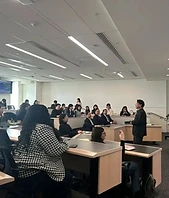
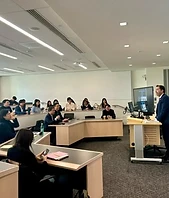
GW KMI x Hyundai Motors Joint Session on Social Entrepreneurship

February 7, 2025
About the Showcase: brought together young social entrepreneurs and delegates from Hyundai Motor Chung Mong-Koo Foundation. Dr. YoungKi Park (GWSB Info Sys & Tech Mgmt) delivered a lecture on Industry 4.0; Dr. Jungho Suh presented research on Social Entrepreneurship tackling ESG backlash and driving sustainability; Dr. El Tarabishy gave the keynote on Social Innovation in dynamic markets. Thanks to Asst. Dean Joseph A. Miranda and the GWSB Operations Team, GW Presidential Fellows Markella Lanara, Nina, and Jack, and Secretary-General John Choi and Hyundai Motor Company. Agenda: 2:00–2:30 GW Campus Tour; 2:30–2:45 Welcome & Introduction of GW KMI (Asst. Dean Joseph Miranda; Drs. Ayman El Tarabishy & Jungho Suh; moderator Dr. Jungho Suh); 2:45–3:15 Presentation 1: Digital Transformation in the Industry 4.0 Era (Dr. YoungKi Park); 3:15–3:30 Coffee/Tea Break; 3:15–3:45 Presentation 2: Social Entrepreneurship: Tackling ESG Backlash and Driving Sustainability (Dr. Jungho Suh); 3:45–4:30 Keynote: Human-Centered Innovation for Social Innovation (Dr. Ayman El Tarabishy); 4:30–5:00 Student Networking/Roundtables, Closing, Group Photo. Powered by GWIKS, GW Office of Innovation and Entrepreneurship, ICSB. --- Companion narrative --- Social Innovation in a Dynamic World: GWSB & KMI Showcase February 7, 2025 GW Foggy Bottom Campus & Duques 651 Duquès Hall, 2201 G St • NW Washington, D.C. 20052 About the Showcase On February 7, 2025, the GW Korean Management Institute proudly hosted the GW KMI x Hyundai Motors Joint Session on Social Entrepreneurship. This exciting event brought together innovative young social entrepreneurs and esteemed delegates from Hyundai Motor Company's social venture arm, Hyundai Motor Chung Mong-Koo Foundation, creating an enriching platform for the exchange of ideas. With the dedicated efforts and leadership of Dr. Ayman El Tarabishy, along with our colleagues' support, the session laid the groundwork for insightful discussions and forward-thinking collaborations. Throughout the day, attendees were treated to a series of engaging presentations and campus activities. YoungKi Park from GWSB Information Systems & Technology Management delivered an insightful lecture on Industry 4.0 that captivated both our students and the Hyundai delegation. His perspectives, honed by his role as an Associate Editor of MIS Quarterly, sparked meaningful dialogue on the integration of technology and sustainable business practices. In addition, the research paper presentation on Social Entrepreneurship by Dr. Jungho Suh of the Management Department—focusing on tackling ESG backlash and driving sustainability—further deepened the discourse and highlighted the innovative approaches emerging from our academic community. Suh's presentation led up to Dr. Tarabishy's keynote on Social Innovation and its application in dynamic markets We extend our heartfelt thanks to everyone who contributed to the success of the event. Special acknowledgments go to Assistant Dean Joseph A. Miranda and the GWSB Operations Team for their unwavering support, as well as to our GW Presidential Fellows—Markella Lanara, Nina, and Jack—for their exceptional guidance during the campus tour. We also appreciate the efforts of Secretary-General John Choi, his team, and Hyundai Motor Company for their commitment to fostering bright and passionate social entrepreneurs. With such a dynamic exchange of ideas, we look forward to future collaborations that continue to build on this strong partnership. Event Gallery ![KMIxHyundai](https://base44.app/api/apps/6a7ee42d5d5b3d275214a9e3/files/mp/public/6a7ee42d5d5b3d275214a9e3/57f8376b2_KMIxHyundai-4-scaled.webp) ![KMIxHyundai](https://base44.app/api/apps/6a7ee42d5d5b3d275214a9e3/files/mp/public/6a7ee42d5d5b3d275214a9e3/d09051d2a_KMIxHyundai-3.webp) ![KMIxHyundai](https://base44.app/api/apps/6a7ee42d5d5b3d275214a9e3/files/mp/public/6a7ee42d5d5b3d275214a9e3/f3c46a13c_KMIxHyundai-18-scaled.webp) ![KMIxHyundai](https://base44.app/api/apps/6a7ee42d5d5b3d275214a9e3/files/mp/public/6a7ee42d5d5b3d275214a9e3/d6aed8a8f_KMIxHyundai-7.webp) ![KMIxHyundai](https://base44.app/api/apps/6a7ee42d5d5b3d275214a9e3/files/mp/public/6a7ee42d5d5b3d275214a9e3/71d8b3c48_KMIxHyundai-1-scaled.webp) Agenda 2:00 - 2:30 pm **GW Campus Tour** 2:30 - 2:45 pm **Welcome & Introduction of GW KMI** - Welcome Remarks: Asst. Dean Joseph Miranda - Presenter: Drs. Ayman El Tarabishy & Jungho Suh - Moderator: Dr. Jungho Suh 2:45 - 3:15 pm **Presentation 1: Digital Transformation in the Industry 4.0 Era** - Presenter: Dr. YoungKi Park, Associate Professor of Info Sys & Tech Mgmt, GW School of Business 3:15 - 3:30 pm **Coffee/Tea Break** 3:15 - 3:45 pm **Presentation 2: Social Entrepreneurship: Tackling ESG Backlash and Driving Sustainability** - Presenter: Dr. Jungho Suh, Assistant Professor of Management, GW School of Business, Project Director of GW KMI 3:45 - 4:30 pm **Keynote: Human-Centered Innovation for Social Innovation** - Presenter: Dr. Ayman El Tarabishy, Deputy Chair, Department of Management, GW School of Business, President & CEO, International Council for Small Business (ICSB), Executive Director of GW KMI 4:30 - 5:00 pm **Student Networking/Roundtables / Closing/Group Photo** - GW Students & Hyundai Motor Foundation Students - All Participants Conference Speakers **YoungKi Park** Associate Professor of Information Systems & Technology Management Dr. YoungKi Park is an associate professor at GW School of Business, specializing in digital strategy and transformation. from USC and over a decade of IT consulting experience at Oracle and LG, his research is featured in top journals like MIS Quarterly, where he also serves as an Associate Editor. Jungho Suh Project Director, GW Korean Management Institute (GW-KMI) Dr. Jungho Suh is a teaching assistant professor at GW School of Business and project director of KMI. His expertise spans evidence-based entre-preneurship, HR management, DE&I, and sustainability. He has collaborated with organizations like the UN Tourism Organization and Korea's Ministry of Tourism, with research featured in outlets such as CNN and The Washington Post. **Ayman ElTarabishy** KMI Executive Director, Deputy Chair, Dept. Ayman El Tarabishy is the deputy chair of the Department of Management and a teaching professor at the GW University School of Business. He specializes in entrepreneurship and innovative, people-centered practices. As president & CEO of the International Council for Small Business (ICSB), he leads a global network spanning over 150 countries.
1 / 5Click to enlarge
Event Record

Global Korean Entrepreneurship Forum 2024 (full agenda)

April 25, 2024
Third Global Korean Entrepreneurship Forum, April 25–26 2024, Washington D.C., hosted by GW School of Business KMI in partnership with the GW Office of Innovation and Entrepreneurship. Inaugural forum 2017, second 2019. Theme: the pivotal role of research, innovation, and policy in fostering entrepreneurial ecosystems. Key themes: Research and Entrepreneurship, Innovation Ecosystems, Policy for Progress, Global Perspectives, Startups and Success Stories, Future Trends. Venue: Elliott School of International Affairs, 7th Floor, The State Room, 1957 E St NW. Full two-day agenda captured (Day 1 opening, plenary, fireside chat, ICSB global sessions at US Congress Longworth House Office Building, reception; Day 2 plenary and panels). Keynote titles confirmed. Partners: KITA, FleishmanHillard, GWIKS, ICSB, Gyeongsang National University, Jinju City, Embassy of the Republic of Korea.
1 / 2Click to enlarge
Event Record

Global Korean Entrepreneurship Forum 2024

April 25, 2024
Key themes: Research and Entrepreneurship; Innovation Ecosystems; Policy for Progress; Global Perspectives; Startups and Success Stories; Future Trends. Keynote topics included South Korea's challenges and opportunities in the post-COVID era; the impact of humane entrepreneurship in S. Korea; K-Social entrepreneurship; the role of entrepreneurship for sustainable development (Jinju); leadership in counterpoint (Korean and American perspective); Korean women entrepreneurs; the intersection of digital nomad/workation and Korea's population conundrum; S. Korea and the United States in science; origin of Korean entrepreneurship in Jinju City; private and public partnerships in innovation; entrepreneurship and the future of global energy; Korea's partnership for Africa's industrialization. Day 1 at the Elliott School State Room; Day 1 afternoon global sessions by ICSB at the U.S. Congress Longworth House Office Building; reception 5:30–7:00 PM; Day 2 plenary and panel at the State Room.
1 / 4Click to enlarge
Announcement

2023 End of Year Message — ICSB World Congress Across Korea

December 24, 2023
## End of Year Message from ICSB President & CEO – Dr. Ayman ElTarabishy Dear Esteemed Members and Supporters of ICSB, As we approach the close of an eventful year, I am delighted to share with you the profound journey that the International Council for Small Business (ICSB) has undertaken throughout 2023. This year has been exceptional, marking one of our organization's most dynamic and impactful periods over the past five years. ### ICSB Congress: A Triple Triumph For the very first time, we orchestrated the ICSB Congress across three diverse cities in South Korea – Seoul, Jinju City, and Gwangju. This pioneering approach showcased our adaptability and exemplified our commitment to innovation and our dedication to meeting the ever-evolving expectations of our esteemed members. It was a resounding success, demonstrating our ability to unite our global community in novel and engaging ways. A special thanks goes to our Chair, Dr. KiChan Kim, for leading the ICSB World Congress in S. Korea. ### Research Excellence and Impact Our commitment to impactful research extends to community engagement. Our study on the origins of Korean Entrepreneurship is making a tangible difference in Jinju City. We are also embarking on unique research ventures, such as exploring the intersection of entrepreneurship and religion. ### Looking Ahead to 2024 - **68th World Congress:** Returning to Europe in Berlin, Germany, under the theme "Empowering Entrepreneurship for a Better Future." - **Africa Initiative:** In March, we will reveal a sustainable plan for ICSB's engagement in Africa to drive economic growth. - **AI Transformation:** ICSB is on the cusp of launching a primary new website that leverages AI to revamp our membership model and knowledge hub. As we approach the new year, let us carry the spirit of innovation, resilience, and collaboration that has defined 2023 into our future endeavors. I extend my heartfelt gratitude to each of you for your unwavering dedication. *Originally published at aymaneltarabishy.com — https://aymaneltarabishy.com/article/2023endofyearmessage*
By Ayman El Tarabishy
Event Record

ICSB World Congress 2023 — Korea (Seoul · Jinju City · Gwangju)

July 1, 2023
For the very first time, ICSB orchestrated the Congress across three diverse cities in South Korea – Seoul, Jinju City, and Gwangju. This pioneering approach showcased adaptability and commitment to innovation. A special thanks goes to Chair Dr. KiChan Kim for leading the ICSB World Congress in S. Korea. The study on the origins of Korean Entrepreneurship is making a tangible difference in Jinju City. (Source: 2023 ICSB End of Year Message, Dr. Ayman ElTarabishy)
Research

South Korea's Thriving Social Venture Ecosystem

June 22, 2023
South Korea has established a reputation for its strong commitment to innovation, consistently ranking among the top countries worldwide in research and development (R&D), patents, creativity, and corporate-academic collaboration. The government has collaborated closely with industry partners "chaebols" such as SK Group and Samsung to foster a culture of innovation and drive technological advancements. ## The Rise of Entrepreneurship It was during the 1980s that South Korea first witnessed the emergence of startups. While South Korea may not have traditionally been renowned for entrepreneurship, the country has been experiencing a significant shift in recent years. This is evidenced by a surge in venture capital investments and the emergence of several unicorns. This growth was fueled by government initiatives, including: - Tech incubator programs - The creation of a ministry for SMEs - Considerable support for self-employment ## The Focus on Social Entrepreneurship What is even more promising is the focus on social entrepreneurship. South Korea introduced the **Social Enterprise Promotion Act in 2007**, which has led to successful ventures focused on job creation, healthcare, the environment, poverty reduction, and education. These ventures are supported by a strong infrastructure including: - Incubators and accelerators - Prize competitions - Co-working spaces - Communities such as **K-Startup**, **Spark Labs**, and **Google for Startups Korea** ## Impact and Lessons Extensive research shows how social entrepreneurship serves as a viable model for regional economic development. A remarkable example is the education sector, where social enterprises have introduced novel approaches to tackle educational inequality and enhance learning outcomes. By utilizing technology and creative teaching methodologies, these initiatives have empowered underprivileged communities and helped create a skilled workforce for the future. *Originally published at aymaneltarabishy.com — https://aymaneltarabishy.com/article/south-koreas-thriving-social-venture-ecosystem*
By Emmanuel Moges
Research

Korean Entrepreneurship

May 7, 2023
South Korea's economic growth since the 1960s has been remarkable, transforming from a low-income agrarian society to a thriving, high-income industrialized economy. Research has shown that government policies played a crucial role in this transformation, mainly through strategic investments in physical and human capital and export promotion strategies. In addition, a focus on technological research and development helped to create a competitive advantage in the export market and cultivate a highly educated workforce. Entrepreneurship has a complex history in South Korea, with cultural values and traditions significantly shaping the country's entrepreneurial landscape. Confucianism, a religion and philosophy emphasizing education, hard work, and community loyalty, has been a driving force behind South Korea's cultural value system and has influenced its society for generations. ### Addressing the Research Gap Despite this, there has been relatively little research on the connection between cultural context and entrepreneurship in South Korea. However, a new academic paper to be published in July 2023 by the International Council for Small Business (ICSB) seeks to address this gap in our understanding. The paper will explore the historical evolution of Korean entrepreneurship, focusing on the role of Jo Shik, a renowned Confucian scholar during the Joseon dynasty, and the city of Jinju in South Korea. The authors argue that these factors were instrumental in shaping the development of Korean entrepreneurship and that understanding their influence is crucial for understanding the country's entrepreneurial landscape today. This paper will be the first academic publication on the history of Korean entrepreneurship in Confucian culture to be published in a Western academic journal. It promises to shed new light on this fascinating topic. *Originally published at aymaneltarabishy.com — https://aymaneltarabishy.com/article/korean-entrepreneurship*
By Ayman El Tarabishy
1 / 2Click to enlarge
ResearchKorean

온라인여행사 사업모델이 한국여행산업에 미친 영향

May 12, 2021
## 온라인여행사 사업모델이 한국여행산업에 미친 영향 서정호 교수 (조지워싱턴대학교 한국학경영연구소 Project Director) 2021 년 5월 8일 코로나19로 인하여 전세계 여행 산업이 심각하게 위축된 상황 속에서도, 다수의 여행 분야 리더들은 2021년 하반기에는 업계의 상황이 크게 개선될 것으로 전망하고 있다. 이러한 리더들의 컨센서스는 경영컨설팅사 맥킨지, 온라인여행언론Skift, UN세계관광기구에서 발표한 자료에서 확인된 여행관련 검색어의 검색 량 증가와 온라인여행의 예약 건수의 증가라는 두 가지 지표에 의해 뒷받침된다.온라인여행업의 회복을 기대해 볼 수 있는 또다른 긍정적인 징후는 지난 해 12월에 진행된 세계 최대 숙박 공유 서비스 에어비앤비의 미국 나스닥 상장에서 발견되었다. 코로나19라는 전례없이 심각한 부정적 외부 효과로 인해 업계 전반의 성장이 위협받고 있는 중임에도 불구하고, 에어비앤비가 기업공개를 추진했고 성공적으로 주식시장에 편입되었다는 점은 온라인여행사들의 향후 실적개선에 대한 밝은 전망에 힘을 실어주고 있다. 조지워싱턴대학교 한국학경영연구소(KMI)는 이러한 경영 환경 속에서 온라인여행사의 사업모델과 이들이 국내여행업에 미치는 영향을 논의하기 위하여 온라인여행사업 전략 전문가인 홍지현 매니저를 지난 3월 KMI 웨비나에 초청였다. 하얏트나 매리어트 같은 글로벌 호텔 체인들과 익스피디아나 야놀자와 같은 온라인여행사들간의 역학관계를 분석해 보고, 온라인여행사들의 의사결정과정에 있어서 빅데이타분석과 실험연구의 중요성에 대해 토론하였다. 홍 매니저는 기조발표를 통해 웨비나를 시작하며, 온라인여행업의 개관에 대해 다루었다. 온라인 여행사는 두 가지 구성요소를 지닌다: i) 온라인 여행 예약 사이트와 ii) 온라인 여행 리뷰 커뮤니티가 그것이다. 온라인 여행 예약 사이트는 여행상품을 거래할 수 있는 전자상거래 사이트이다. 한편, 트립어드바이저와 같은 온라인 여행 리뷰 커뮤니티는 여행자들로 하여금 호텔 숙박, 여행지 맛집, 지역 이벤트 및 축제와 관련된 리뷰를 온라인에 남기고 다른 여행자들과 공유할 수 있게 하는 온라인 플랫폼이다. 이러한 온라인 여행 리뷰 기능은 업체들로 하여금 웹사이트 방문자수 증가를 유도할 수 있게 하여 궁극적으로 더 큰 광고 수익을 창출하게끔 한다. ResearchAndMarkets.com 1 에 의하면, 전세계 온라인 여행 사업의 시장규모는 2019년 744.7조원에 달하는 것으로 분석되었다. 온라인 여행업은 2020년 코로나19팬데믹 충격으로 인하여 전세계 시장가치가 595.8조원으로 줄어들었지만, 2015년부터 2019년까지 기간 동안 약 7.9% 연간 성장률을 기록한 동력이 남아있고, 동일 기간 동안 여행자들의 여행 소비 행태도 과거의 오프라인 거래에서 온라인 거래로 신속히 전환되었다. 온라인여행업의 절대적 비중이 증가하는 추세는 한국의 여행 시장도 예외가 아니다. 한국 온라인 여행업은 2020년 약20조원 규모로 추산되며, 유니콘 기업으로 인정 받은 야놀자의 사례가 그 성장을 방증한다 2. 야놀자는 최근 진행된 싱가폴 국부펀드와 Booking Holdings 로부터의 2천400억 규모 투자유치를 통해 한국 최대 온라인여행사업체로 등극하였으며 1조원에 달하는 기업가치를 평가받았다. 홍지현 매니저는 웨비나 말미에, 빅데이타에만 지나치게 의존하게 되는 오류를 벗어날 것으로 지적하였다. 국내 온라인 여행업계 기업가들에게 의사결정과정에서 빅데이타 분석과 실험연구를 통한 인과관계 분석을 균형 있게 활용하여 사업 전략 개발에 활용할 것을 또한 주문하며, 코로나19로 사업여건이 어려운 업계 관계자들에게 동기 부여기 될 수 있는 제언들로 논의를 맺었다. *KMI의 지난 3월 웨비나 전반에 대해 궁금한 독자들은 다음의 웹사이트에서 보다 자세한 정보를 확인할 수 있다:* https://kmigwsb.org/event/online-travel-agencies-business-model-and-its-impact-on-the-travel-industry-in-south-korea/ --- 1 Researchandmarkets.com 2 mk.co.kr
By 서정호 교수 (조지워싱턴대학교 한국학경영연구소 Project Director)
2021Research
Research

OTA's Business Model and its Impact on the Travel Industry in South Korea

May 12, 2021
## OTA's Business Model and its Impact on the Travel Industry in South Korea by Jungho Suh, Project Director, KMI While COVID-19 has devastated global travel demand, many tourism and travel industry leaders predict that international tourism will rebound by the end of 2021. The consensus is supported by the signs of growing interests in travel-related keyword searches and advanced online travel bookings reported by Mckinsey, Skift, and the United Nations World Tourism Organization (UNWTO). Moreover, despite the fact that many online travel platforms have shown a historic downturn in growth rates, Airbnb did an IPO in December 2020 amid the COVID-19 pandemic. This leads us to the outlook that the online travel agency (OTA) business could turn around as international travel restarts. To discuss the dynamics between global hotel chains and OTA and the crucial role of big data analytics and experimentation in OTA business settings, the Korean Management Institute (KMI) invited Ms. JiHyun Hong, a specialist in OTA strategy, to KMI March Webinar. What is an OTA? In JiHyun's keynote speech, she opened up the discussion of the OTA supply landscape. The OTA business model mainly consists of two components: i) travel booking site and ii) online travel review community. An online travel booking site is an e-commerce platform that enables consumers to purchase their travel products and services such as flight tickets, hotel room bookings, and restaurant reservations. For example, travelers can book their hotel rooms directly via Hyatt.com or an online travel agency (OTA) such as Expedia. An online travel review community (e.g., TripAdvisor) allows consumers to review and rate their travel experiences (e.g., hotel stays, restaurants, tourist attractions, local events) on its online platform. Online travel review features on OTAs' websites often increase website traffic and the unique monthly active users, generating profits via advertisements on their website. According to ResaerchAndMarkets.com's report 1, the global market value of OTA business reached approximately $744.7 billion in 2019. Although the global market value was declined to $595.8 billion in 2020 due to the global pandemic, a compound annual growth rate (CAGR) has been increased by 7.9% between 2015-2019, and the global travel market has been shifting online during the same period. In addition, COVID-19 has strongly driven this transformation from brick-and-mortar businesses into online platforms for the past year. OTA business in South Korea is no exception to this trend. The OTA market in South Korea was estimated at $20 billion in 2020 and growing fast 2. Another great benchmark of the OTA business in South Korea is the case of Yanolja, the largest online travel platform in the country. The South Korean travel startup unicorn raised nearly $240 million from investors, including Singapore sovereign wealth fund GIC and Booking Holdings. The recent Series D round brought the South Korean OTA's valuation to more than $1 billion. At the end of her keynote, JiHyun emphasized that decision-makers at OTAs in South Korea should think about how to keep the balance between big data analytics and causality test through experimentation when utilizing data for strategy building. She also shared her views on the future trends in the travel industry, which could be an encouraging message to South Korean entrepreneurs in the OTA business. *Readers can find more details about this webinar on the following website: https://kmigwsb.org/event/online-travel-agencies-business-model-and-its-impact-on-the-travel-industry-in-south-korea/* --- 1 researchandmarkets.com 2 mk.co.kr
By Jungho Suh
2021Research
Event Recap

2021 Innovation Business Conference: Innovation and Trajectory Optimization

April 11, 2021
## 2021 Innovation Business Conference: Innovation and Trajectory Optimization ![2021 Innovation Business Conference](https://base44.app/api/apps/6a7ee42d5d5b3d275214a9e3/files/mp/public/6a7ee42d5d5b3d275214a9e3/27f287c40_EysyNY9VEAAx2MS.jpeg) ### The Ministry of SMEs and Startups is a ministry of the Republic of Korea, established in July 2017 by the Government of South Korea.
Event Record

Online Travel Agencies Business Model webinar

April 10, 2021
## Online Travel Agencies' Business Model and its Impact on the Travel Industry in South Korea [Online Travel Agencies' Business Model and its Impact on the Travel Industry in South Korea](https://www.youtube.com/watch?v=aP_WWyTlLAQ) — International Council for Small Business KMI Webinar Series 01 ### Webinar Outline - OTA supply landscape - Global hotel chains and OTA strategy - Utilizing data for strategy building - Experimentation in business settings ### About the Speaker **Ms. JiHyun Hong**, Wharton MBA, is a Supply Optimization and Commercialization Manager at Agoda, one of the world's fastest-growing online travel booking platforms under the Booking Holdings umbrella. She develops and executes strategic roadmap for chain hotel supply (KeyAccounts) booking growth by identifying opportunities across organization including account management practices, pricing, and marketing. Previously, JiHyun was Partnerships Innovation Manager at Agoda. She was in charge of sales process improvement for the Strategic Partnerships team. Before that, she was Sales Executive at Hilton Worldwide, Conrad Seoul. JiHyun earned her MBA at The Wharton School, University of Pennsylvania. She also completed BBA in Hotel Management at Kyung Hee University, Seoul, South Korea.
Announcement

S. Korea After Corona

April 30, 2020
## Introduction As the global community looks to South Korea to guide their own nations, we wonder what really sets the Korean experience apart from the rest of the world. Korea's involvement and participation in finding their nation's 'new normal' is derived from a balance between the scientific and humane efforts needed to survive and ultimately thrive during this unparalleled time. ## The Shift to Online South Korea has found such success in escaping their 'corona blues' thanks to a widespread transition from working, learning, and governing offline to online. For quite a while, there has been an extreme juxtaposition between the traditional and new-age Korea. In finding a new normal, S. Korea will be able to increase their people's quality of life and guide the rest of the world in managing a balance between off- and on-line life. ## Challenges and Opportunities Within contaminated nations, there are three primary challenges: - **Infection control:** Physical distancing, washing hands, and wearing masks. - **Mental depression:** Feelings of loneliness, fear, worry, and stress. - **Economic depression:** Work closures, school closures, and unemployment. Despite these challenges, there is an opportunity. Online transitions—such as working from home, E-health, online shopping, and online courses—have created a new normal in Korea. This is a normalcy that has nothing to do with the old normal. ## A Humane Approach Hope, founded in the humane approach of entrepreneurship, has been at the centerfold of their innovation. Science alone is insufficient; we need connection. Humane affection, such as campaigns to provide food for the elderly and supporting small and medium-sized enterprises (SMEs), has guided the formation of Korea's new normal. ## Acceptance of Reality Coronavirus is our new reality, and S. Korea has done what many countries have been unable to do: accept this new reality. By admitting surrender through acceptance, the nation could implement groundbreaking solutions like the 'drive-through' testing system. While other nations faced shortages and panic, South Korea used technology to empower its citizens, such as providing applications to track mask availability. ## Looking Ahead South Korea has managed to maintain a low mortality rate through widespread testing and quick results. Now, the nation is turning its attention to the economic depression through measures like tax breaks for SMEs. The fate of the world depends on the acceptance of reality and the formation of a new normal that is founded at the intersection of science and empathy. *Originally published at aymaneltarabishy.com — https://aymaneltarabishy.com/article/s-korea-after-corona*
By Ayman El Tarabishy
Event Record

Global Korean Entrepreneurship Forum 2019 (Second)

January 1, 2019
The second Global Korean Entrepreneurship Forum. (Exact date not recorded in the source; year documented on the GKEF page.)
2019Event Record
Event Recap

Korean Management Institute Featured at the GW October Conference

December 5, 2018
## Korean Management Institute Featured at the GW October Conference At the GW October Conference (October 22-24, 2018) and in collaboration with the GWSB Korean Management Institute, Juil Kim, from the Korea Institute of Science & Technology Evaluation and Planning presented his paper titled, "Direct Support vs. Indirect Support: Towards an Optimal Policy Mix for R&D Investment of Korean SMEs". View the Paper
By KMI
Event Record

The GW Korean Management Institute Supported Seoul Conference

December 5, 2018
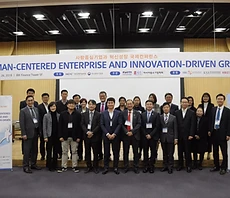
The GW Korean Management Institute supported the Seoul Conference focused on Humane Entrepreneurship and the Innovation-Driven Economy. November saw the most active engagement of global leaders on key topics.
1 / 4Click to enlarge
Profile

Chloe Kim: 17-year-old Korean American wins gold for US in PyeongChang

February 15, 2018
## Chloe Kim: 17-year-old Korean American wins gold for US in PyeongChang Chloe Kim, 17, is a Korean American snowboarder who recently became the youngest woman to win an Olympic snowboarding medal when she took gold in the Women's Halfpipe finals. What touched many people's hearts was not only her performance as a gold medalist, but also the beautiful story behind her family and heritage. The support from her parents as immigrants in the US, experience of winning a gold medal in her native country, and her vibrant tweets attracted fans all around the world. Read more about Chloe Kim and her story by clicking below! https://www.nbcnews.com/news/asian-america/chloe-kim-s-olympics-triumph-realizes-american-dream-immigrant-family-n847541
Profile

Going for the Gold

February 8, 2018
## 'Going for the Gold' Lisa Delpy Neirotti, Associate Professor of tourism and sport management, and GWSB students in her "Behind the Scenes at the Olympic Games" class have landed in PyeongChang, Republic of Korea, for the 2018 Olympic Winter Games. Students in the course learn about the business side of the games in preparation for traveling to the Olympics, where they do data collection and other research work. While in PyeongChang, the students will conduct research on all aspects of the games, visiting various event venues and meeting with International Olympic Committee (IOC) members and staff, U.S. Olympic Committee representatives, sponsors, volunteers and athletes. "The Olympics have always been a passion of mine, as well as a major research area," Dr. Delpy Neirotti said. "The Olympics set the direction. It's the ultimate sports event—and it offers many great lessons to be learned." This year's winter games mark Dr. Delpy Neirotti's 19th time attending the Olympics, and her 15th with a GWSB class. Check the GWSB 2018 Winter Olympics [blog](https://2018olympics.gwu.edu/) for updates throughout the course of the games.
By KMI
General

KAIST Visits GWU

January 1, 2018
## KAIST Visits GWU **On November 3, 2015, in coordination with the Korean Embassy in Washington, D.C., a select group of highly successful students of diverse disciplinary backgrounds from KAIST, formerly known as the Korea Advanced Institute of Science and Technology, a public research university located in Daedeok Innopolis, Daejeon, South Korea, visited the George Washington University School of Engineering (GWSE).** Sitting in a naturally well-lit room of modern architecture and sleek design, with wall-to-wall glass surrounding the classroom to expose the top-of-the-line equipment and research laboratories of the institution, the group convened to listen to introductory remarks of Dilara Bogut, a member of KMI's operations team, and the Korean Management Institute at GWU through the assistance of an interpreter. The KMI, which serves as the first country-specific research institution on Korea, was explained to draw parallels to the student's interests and purpose in visiting the U.S. that week. Explaining that as youth of Korea, the KMI and GW looks forward to the success to its youth in furthering the development of US-Korea relations. As students of a research-based institution, the floor was then opened to Dr. Zhenyu Li, Assistant Professor at the GWSE and researcher on nanophotonics and microfluidics. Dr. Li's presentation, titled, "Handheld and Wearable Sensors for Decentralized Medical Diagnostics," drew the attention of the students, raising their hands to inquire on this process and that process, particularly on the topic of current in vitro diagnostics (IVD).
Announcement

KMI Student Won the 2017 UCG Fall Case Competition

November 21, 2017
## KMI Student Won the 2017 UCG Fall Case Competition On Saturday, November 11, 2017, the GW Undergraduate Consulting Group (UCG) launched [the Inaugural Fall Case Competition](https://www.facebook.com/events/448900448839642/), where 15 teams of 3-4 students competed against one another intensely. The competition consisted of two knock-out rounds, judged by senior consultants from IBM, KPMG, and Deloitte. [GW UCG](http://www.gwucg.org/) is an undergraduate student organization, affiliate with the GW School of Business of The George Washington University, striving to prepare aspiring consultants. The student organization provides GW students a consolidated place to learn about consulting, develop the skills necessary to excel in the consulting industry, and gain access to hiring opportunities in all areas of consulting. All participants put valuable efforts and enthusiasm into their presentations, which made this first-time ever competition a success. After a full day of competition, Won Seok Han, a GWSB undergraduate senior and a program coordinator at the Korean Management Institue (KMI), won the first place with Hyunjung Kim, Jae Hun Jung, and Vaibhav Jain. Special thanks to GW UCG and The George Washington University – School of Business for organizing the event. Additionally, a huge thank you to the judges from Deloitte, IBM, and KPMG, who spent a full day on Saturday, judging cases and providing the participants with highly useful feedback.
Event Recap

Concerted International Small Business Policy: Unified Agenda Needed for a Sustainable Global Economy

November 16, 2017
## Concerted International Small Business Policy: Unified Agenda Needed for a Sustainable Global Economy ***Last week, world experts gathered in Washington DC at the George Washington University for the 8th Annual Global Entrepreneurship Research and Policy Conference to engage in a much-needed dialogue centered around global entrepreneurship.*** This group of experts composed of leaders from the United States, Korea, Canada, Italy, China, Argentina, Egypt, and the United Nations were united in their support for Micro-, Small-, and Medium Enterprises (MSMEs). As the Organisation for Economic Co-operation and Development (OECD) stated in their recent [scorecard](http://www.oecd.org/cfe/smes/financing-smes-and-entrepreneurs-23065265.htm) for SMEs, there is solid evidence for the need to improve SME policy making. We must advance the workforce not only in America, but in nations across the world to create jobs for Industrial Revolution 4.0—careers that can survive recent and continuing technological advances. One unified message that transcended borders on campus last week was the need for humane entrepreneurship and the desire for a global guide for prosperous MSME development. *Dr. El Tarabishy is the Executive Director of ICSB and a Teaching Professor of Management at the George Washington University's School of Business.* *Dr. Sargeant is the Senior Vice-President of Development and Advocacy with ICSB and previously served as Chief Counsel for Advocacy at the U.S. Small Business Administration.* *The International Council for Small Business (ICSB) is a non-profit organization devoted to continuing management education for entrepreneurs and small business. The ICSB is a co-author of the resolution for United Nations MSME Day.* *This article was originally published by the ICSB and all rights belong to their respective owner. The original copy can be found here.*
1 / 3Click to enlarge
Event Recap

November CUBOxTED Recap: Jang Yong Lee

November 16, 2017
## November CUBOxTED Recap: Jang Yong Lee On Friday, November 10, 2017, the Corean Undergraduate Business Organization (CUBO) successfully launched its second series of CUBOxTED. This was a follow-up lecture to the previous one, and was delivered by Jang Yong Lee, a senior IT officer at The World Bank Group (WBG) as well as the president of Korean Staff Association (KSA), an organization that involves Korean employees at the WBG and the International Monetary Fund (IMF) for the purpose of networking and information sharing. With his humble but compelling voice, Mr. Lee set off the lecture with an anecdote on how he launched his first job in a celebrated consulting firm. Then he shared valuable insights on how he managed to transfer his career from private enterprises to the international organization. The key takeaway from the lecture was the hiring process of international organizations and how one can successfully launch his or her career at those institutions. Followed the lecture was a 30-minute Q&A session, and students from both undergraduate and graduate schools who are passionate about working in these organizations enthusiastically asked questions encompassing broad ranges of topics. The lecture ended with a group photo with Mr. Lee and all the attendees. Special thanks to Mr. Lee who was willing to give his own time for the improvement of GW Korean students!
1 / 6Click to enlarge
Event Record

GW October Conference 2017 (8th Annual)

November 16, 2017
The 8th Annual Global Entrepreneurship Research and Policy Conference. World experts gathered in Washington, D.C. at the George Washington University for a dialogue centered around global entrepreneurship. Theme: Concerted International Small Business Policy — Unified Agenda Needed for a Sustainable Global Economy.
1 / 3Click to enlarge
Event Record

November CUBOxTED

November 10, 2017
On Friday, November 10, 2017, the Corean Undergraduate Business Organization (CUBO) successfully launched its second series of CUBOxTED, delivered by Jang Yong Lee, a senior IT officer, recounting how he launched his first job in a celebrated consulting firm.
1 / 6Click to enlarge
Announcement

GW OCTOBER 2017: New Frontiers in Entrepreneurship and the Definition of Work

October 26, 2017
On October 26th and 27th, The George Washington University School of Business hosted the 8th Annual GW October Entrepreneurship Research and Policy Conference. The conference theme: New Frontiers in Entrepreneurship and the Definition of Work. The conference brought together practitioners, educators, policymakers and industry CEOs and leaders to explore new entrepreneurial frontiers like automation and universal basic income — identifying key stakeholders and how they can collaborate for success. Plenary sessions: 1. New Frontiers in Entrepreneurship and the Definition of Work — Industrial automation and AI are bringing rapid changes to the workplace, particularly in defense, healthcare, education and the service sector. In 2014, Forrester Research estimated U.S. B2B online sales revenues at $1 trillion. Leading academic researchers, development experts, and policymakers shared examples of innovative SME policy programs. 2. SME Policies, Support Programs and the Unintended Consequences — As key drivers of job creation, SMEs play a key role in economic development strategies. This panel addressed trade-offs and benefits of policies intended to improve the entrepreneurial and small business environment. 3. New Frontiers of Entrepreneurship Education — Knowledge and skills for the next generation differ from today. Higher Education can bridge the gap. This session discussed what revolution is needed in higher education to prepare students for Industry 4.0. 4. The End of the World as We Know It; Creating the Time Capsule — 600 million jobs will be needed in the next 15 years. This collaborative conference-wide discussion explored trends, challenges, and opportunities for the next 15 years. Registration deadline: October 9th.
Event Record

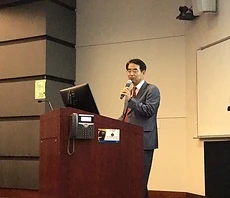
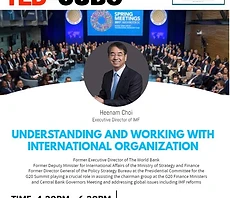
CUBOxTED September Event: Heenam Choi

September 15, 2017
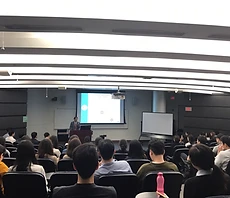
KMI proudly sponsored CUBO (Corean Undergraduate Business Organization) monthly CUBOxTED Talk events. CUBO is an undergraduate Korean organization offering career networking, social, and mentoring resources for Korean students at GW interested in business. Starting September 2017, CUBO and KISO (Korean International Studies Organization) hosted a monthly lecture where renowned speakers share experiences in a TED Talk fashion. The September event speaker was Heenam Choi, Deputy Minister for International Affairs of the Ministry of Strategy and Finance, formerly with the IMF. The event was conducted in Korean. More details: cuboxtedtalk.eventbrite.com --- Full Recap --- On Friday, September 15, 2017, the Korean Management Institute (KMI) at GWSB sponsored the monthly CUBOxKISO Lecture Series, launched with huge interest. The event drew 50+ students from The George Washington University, Georgetown University, and Johns Hopkins SAIS (School of Advanced International Studies). The lecture was delivered by Heenam Choi, Deputy Minister for International Affairs of the Ministry of Strategy and Finance (formerly with the IMF). The program began with CUBO's (Corean Undergraduate Business Organization) 2017-2018 General Body Meeting. Executive board members introduced CUBO's upcoming programs: Job Hunting, CuboME, Case Study Group, Marketing Competition, CUBOxTED, and CPA/CFA Study Group. Dr. Choi shared valuable experience working at the World Bank and International Monetary Fund. During Q&A, one graduate student from SAIS asked about the World Bank's position on China's AIIB (Asian Infrastructure Investment Bank), the counterpart of the World Bank's ADB (Asia Development Bank). Uncertain of AIIB's objectives, the Bank observed its behaviors closely in the beginning, Dr. Choi said; now they consider one another a strong partner whose synergy can be optimally beneficial for developing countries in Asia. The lecture ended with a group photo. CUBO, with KISO, prepared another CUBOxTED talk later in the semester.
1 / 16Click to enlarge
Profile

Media and Press — Samsung's CEO Crisis

August 25, 2017
The last 12 months were a tough period for Samsung. The recall crisis of the Samsung Galaxy Note 7 caused billions of losses. In less than 4 months, the biggest corruption scandal in the history of South Korea transfixed the nation and led to the impeachment of President Park Geun-hye. Along with the scandal came the trial on bribery and embezzlement against Jay Y. Lee, the de facto head of the Samsung conglomerate. On August 25, 2017, Lee was convicted of all 5 charges and sentenced to five years in prison — one of the harshest sentences handed to a South Korean chaebol executive. Dr. Paul M. Swiercz, professor of management at George Washington University and co-founder of the Korean Management Institute, has been a longtime observer of Korean business activities. His article 'Real lesson of Samsung's error' was published in The Korean Times on February 9, 2017. His comments on the Samsung scandal were also cited in Bloomberg Businessweek. News Articles on Samsung Crisis: - Real lesson of Samsung's error — https://www.koreatimes.co.kr/www/opinion/2017/06/162_223645.html - Summer of Samsung: A Corruption Scandal, a Political Firestorm—and a Record Profit — https://www.bloomberg.com/news/features/2017-07-27/summer-of-samsung-a-corruption-scandal-a-political-firestorm-and-a-record-profit - Samsung Heir Gets 5 Years for Scandal That Toppled a President — https://www.bloomberg.com/news/articles/2017-08-25/samsung-heir-sentenced-to-five-years-prison-on-graft-conviction - Samsung boss jailed for five years — http://www.fudzilla.com/news/44376-samsung-boss-jailed-for-five-years About Dr. Swiercz: Paul Michael Swiercz has published more than 35 refereed research articles; his case studies on Home Depot and Delta Airlines have appeared in six best selling strategy text books. His case study — Food Lion vs. the UFCW: Time for a Change? — was selected for the Best Case Award by the 2002 Academy of Management.
1 / 5Click to enlarge
Announcement

KMI: Strengthening U.S.-R.O.K. Ties (GWSB Annual Magazine, Spring 2017)

May 18, 2017
An article about KMI's annual conference was published in The George Washington University School of Business Annual Magazine Spring 2017. In January, the Korean Management Institute (KMI) at the George Washington University School of Business hosted its annual conference on the current status of South Korea. The conference program included a special introduction and welcome from GW President Steven Knapp, followed by a welcome address by Ambassador Ahn Ho-Young, Republic of Korea. A memorandum of understanding between GW and the PyeongChang 2018 Olympic and Paralympic Winter Games was signed. Dr. Hee-Beom Lee, president and CEO of the PyeongChang 2018 Olympic and Paralympic Winter Games and GWSB visiting professor of management, was honored. His keynote address, 'Distinguished Past, Dynamic Present and Exciting Future,' provided an overview of the Republic of Korea's path from a poor nation in the late 1940s to the economic powerhouse it is today, and a preview of the planned opening ceremonies for the 2018 winter games. KMI's Executive Director Ayman El Tarabishy, associate teaching professor of management, explained that the institute brings together a wide range of academicians, researchers, business people, policymakers, government experts, students and others who have an interest in U.S.-Korea relations through a portfolio of diverse programs — classes, workshops, international exchange, executive education and research.
Event Record

ICSB MSMEs Summit at the United Nations HQ

May 11, 2017
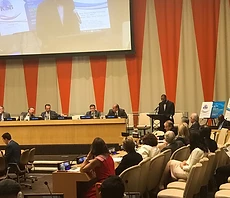
About the MSMEs Day Knowledge Summit. On April 6, 2017, The United Nations General Assembly adopted a resolution recognizing the crucial role Micro-, Small and Medium-Sized Enterprises (MSMEs) play in achieving the 2030 Agenda for Sustainable Development. Resolution (A/71/L.60) designates June 27 as 'Micro-, Small and Medium-Sized Enterprises Day.' With support from the ICSB, The Mission of Argentina to the UN authored the resolution, co-sponsored by 45 member states representing over 5 billion people. Since the adoption of the 2030 UN Sustainable Development Goals Agenda, all countries have been working for its implementation. MSMEs have the potential to make a long-lasting positive impact on global development needs, as the engine for economic growth and job creation, accounting for two out of three net new jobs created worldwide. Prince Constantijn Van Oranje, of the Netherlands, joined the ICSB Summit via video and shared his congratulations and support of MSMEs, which form the backbone of the economy and vast majority of companies, yet are widely overlooked due to the lack of a powerful unified lobby. He spoke about his leadership role with StartupDelta, a Dutch independent public-private partnership which promotes and connects startups and MSMEs. Visit the MSME Day Official Website: https://msmeday.org/
1 / 7Click to enlarge
Event Recap

KMI Knowledge Forum Recap: What Is Entrepreneurship? (April 14, 2017)

April 14, 2017
On Friday, April 14, 2017, the Korean Management Institute (KMI) at GWU School of Business presented a knowledge forum on 'What is Entrepreneurship?' by Dr. Ayman El Tarabishy, an associate professor at GWSB and Executive Director at KMI and ICSB. Just flying from South Korea the night before, Dr. Tarabishy shared an amusing experience — a night market called 'Yashijang' in Dongdaemun that runs from 10 PM until sunrise — a representation of how dynamic and passionate Korean culture is. After the presentation on the difference between innovation and creativity, Gyujin Shin (GWSB Information Systems Technology graduate student) asked whether Korean global conglomerates like Samsung and Hyundai are innovative. The professor shared a valuable conversation with one of Samsung's CEOs about Samsung's goal and strategy. Dr. Tarabishy urged the audience to prepare for the Fourth Industrial Revolution, which will fuse technologies and blur boundaries. Disruptive technology can shatter an existing market — built-in camera phones brought the demise of the digital camera market. Prepared by Won Seok Han.
2017Event Recap
Event Record

KMI Knowledge Forum: What Is Entrepreneurship? (April 14, 2017)

April 14, 2017
Title: What is Entrepreneurship? Speaker: Dr. Ayman El Tarabishy, Associate Professor at GWSB, Executive Director of KMI and ICSB. On Friday, April 14, 2017, the Korean Management Institute presented a knowledge forum on 'What is Entrepreneurship?' Just flying from South Korea the night before, Dr. Tarabishy shared an amusing experience — he was surprised to learn there is a night market called 'Yashijang' in Dongdaemun that starts at 10 PM and continues until sunrise — a representation of how dynamic and passionate Korean culture and people are, and why he studies Korean management style. After the presentation on the difference between innovation and creativity, Gyujin Shin (a GWSB Information Systems Technology graduate student) asked whether Korean global conglomerates like Samsung and Hyundai are innovative. The professor shared a valuable conversation with one of Samsung's CEOs about Samsung's goal and strategy in this rapidly changing world. Dr. Tarabishy urged the audience to prepare for the incoming wave of the Fourth Industrial Revolution, which will fuse different technologies and blur the lines between different parameters. He mentioned how disruptive technology can shatter an existing market and create a whole new one — advancing built-in camera phone technology brought the demise of the digital camera market. Prepared by Won Seok Han.
1 / 2Click to enlarge
Event Record

Henry Yeung: East Asia's Role in the New Global Economy

February 13, 2017
Title: East Asia's Role in the New Global Economy: Economics, Politics, and US Investment. Featured Speaker: Henry Yeung, Provost's Chair and Professor of Economic Geography, Director of the JY Pillay Comparative Asia Research Centre, Co-Director of the Global Networks Centre, National University of Singapore. Based on his recent book published by Cornell University Press, Strategic Coupling: East Asian Industrial Transformation in the New Global Economy, Professor Yeung examined economic development and state-firm relations in East Asia, focusing on the region's emerging role in the new global economy. Drawing from empirical research on South Korea, Taiwan, and Singapore, he argues that global production network dynamics and firm-specific initiatives are critical to the successful industrial transformation of these East Asian economies. His work offers a new perspective on state-firm relations in the changing context of global economic governance in East Asia. Hosted by GW-CIBER.
1 / 7Click to enlarge
Announcement

Volunteer Form for 2018 Winter Olympics

January 26, 2017
As part of the KMI Summit on January 24, 2017, GW signed an agreement to provide up to 50 student volunteers for the 2018 Winter Olympics in South Korea. This page hosted the volunteer interest form. GWToday article: https://gwtoday.gwu.edu/students-have-volunteer-opportunities-2018-winter-olympics Summit Recap: see the related 2017 Annual Conference record.
2017Announcement
Event Recap

Media and Press — KMI Summit on the State of Korea (January 24, 2017)

January 26, 2017
Media and press links from the KMI Summit on the State of Korea, hosted January 24, 2017 at The George Washington University (GWU) City View room. The summit featured the MOU between GWU and PyeongChang 2018 for volunteer opportunities, and extensive Korean press coverage of the event and of Tami Overby's discussion of KORUS FTA in the Trump era. Press outlets included Pressian, GWToday, Yonhap, Hankookilbo, Segye, Mydaily, Chosun Sports, MK Sports, YTN, and Gukjenews. The full summit recap with pictures and video is at the related summit-2017-recap page.
1 / 19Click to enlarge
Event Record

Annual Conference: The State of South Korea (January 24, 2017)

January 24, 2017
On Tuesday, January 24, 2017, the Korean Management Institute (KMI) at The George Washington University School of Business hosted its annual conference on the state of South Korea. The conference program included a special introduction and welcome from GW President Knapp, followed by a welcome address by Ambassador Ahn Ho-Young, Republic of Korea. An MOU ceremony between GWU and PyeongChang 2018 Olympic and Paralympic Winter Games was held, to strengthen relations and represent GWU's support for the upcoming games. Dr. Hee-Beom Lee, President and CEO of PyeongChang 2018 and Visiting Professor of Management at GWU, was honored. His keynote 'Distinguished Past, Dynamic Present, and Exciting Future' overviewed Korean economic development since the 1940s — from one of the poorest nations after WWII to an international economic power without major natural resources — and previewed the Olympic ceremonies (freedom of environment, language, accessibility, age, and safety). Ms. Tami Overby, Senior Vice President for Asia at the U.S. Chamber of Commerce and President of the U.S.-Korea Business Council, discussed the United States-Korea Free Trade Agreement (KORUS FTA), calling it the gold standard and detailing benefits to both countries. A panel discussion featured Dr. Lee, Dr. Yoon Park (Professor of International Business at GWU), and Dr. KiChan Kim (Professor at The Catholic University of Korea), moderated by Dr. Ayman El Tarabishy, Executive Director of KMI.
Event Record

Global Korean Entrepreneurship Forum 2017 (Inaugural)

January 1, 2017
The inaugural Global Korean Entrepreneurship Forum, hosted by KMI.
2017Event Record
Research

The Role of Innovation and Creativity in Manufacturing (U.S.-Korea Business Innovation Partnership Conference)

October 15, 2016
U.S.-Korea Business Innovation Partnership Conference — Dr. Tarabishy was the first keynote speaker at the U.S.-Korea Business Innovation Partnership conference, held at the Willard InterContinental Hotel Willard Room (Washington D.C.) on October 15th, 2016. Over 200 Korean delegates and over 100 U.S. delegates composed of government officials, CEOs, policy makers, and entrepreneurs attended the event, highlighted by President Park Geun-hye of the Republic of Korea. Organizers: Korea Chamber of Commerce and Industry (KCCI), Korea Trade and Investment Promotion Agency (KOTRA), and National Association of Manufacturers (NAM). Dr. Tarabishy's article on the role of innovation and creativity in the U.S. and Korean manufacturing sector. Summary: If asked to pick between Innovation and Entrepreneurship to make a country succeed, most countries picked innovation. As important as innovation (R&D) is, entrepreneurship should be the ultimate focus. SMEs and manufacturing firms should lead in entrepreneurship — entering new markets, taking risks, moving fast. Advice to innovate Korean Manufacturing: apply the ICE model: Innovation = Creativity × Entrepreneurship. Entrepreneurship is through globalization undertaken by small and medium manufacturing firms. Manufacturing is essential for economic prosperity: delivers prosperity, reduces unemployment, ensures national security, promotes global competitiveness. On Creative Economic Policy: start with the Creative economy, but that's half the formula; the other half is Entrepreneurship. Customers look at Price, Convenience, Personalization, and Speed — S. Korea can succeed in all four. On youth unemployment: Korea should celebrate their youth by encouraging all companies to offer internship programs. The youth are Korea's future leaders.
1 / 4Click to enlarge
Event Record

ICSB Korea 2016 Entrepreneurship and SME Conference

April 3, 2016
This past month, the world's leading scholars, academics, policy makers, and practitioners gathered in Seoul, South Korea to discuss a broad variety of topics centered around our growing international society. The main conference tracks included creatively interacting with the progressive globalizing economy, humane entrepreneurship centered around new SDG's, and creating new opportunities in regards to educating the youth and job creation. Press coverage links from the event are preserved in the record.
1 / 2Click to enlarge
Announcement

GW Today Article on Ambassador Oh Joon Lecture

March 21, 2016
GW Today, the George Washington University's official online news source, published a piece on Ambassador Oh Joon's lecture at GWU on March 10, 2016. Full article: https://gwtoday.gwu.edu/sustainable-development-requires-evolving-agenda
Event Record

GW Lecture Series: Ambassador Oh Joon

March 10, 2016

In the tale of two towns, Permanent Representative of the Republic of Korea to the United Nations, Ambassador Oh Joon explains, Town A wakes up everyday to find a way to send their children to school. But if someone in the family gets sick, there is no such thing as healthcare. In Town B, people get up to decide if they should invest in the stock market. They send their kids to the best schools and they go to the best doctors even if they don’t have best health care. Not a lot of countries in the world have experienced this kind of transition.

Ambassador Joon painted a picture to a group of students and academicians sitting before him in the auditorium of the Elliott School at the George Washington University (GWU) on Thursday, March 10, 2016. The United Nations wants to facilitate this kind of transition by finding out what is needed to make the transition even if people in Town B are not necessarily happier than the people in Town A. He explained that we cannot know what makes people happy, but we know that you cannot be happy with an empty stomach or with sick children.
This is why we need development.

As the flags of the United States of America and the Republic of Korea stood side by side on the podium of the GWU Elliott School, symbolizing both countries’ alliance to one another, Ambassador Joon’s lecture for the GW Lecture Series, organized jointly by GWU, the GWU Korean Management Institute (KMI) and the International Council for Small Business (ICSB), titled, “Sustainable Development Goals: What does it mean to the World?” explained the coming to being of a concept buzzing around the world.

The concept of development changes continually. The United Nations, for instance, is 70 years old and it was initially established to feed people and for economic growth. In the 1980s, the concept of development expanded to encompass social issues, such as gender equality, welfare, and human dignity. Now, the world has come to the revelation that climate change is giving us the greatest challenge of all. We have finally realized that if we do not take care of our planet, we may not have it anymore.

This is the concept of sustainable development, the Sustainable Development Goals, or SGDs.

To give some more context, in the 2000s we had the Millennium Development Goals (MDGs). They were 8 goals with an expiration date of 2015. It emphasized social issues and gender issues. As they were quite specific, people asked why member states of the UN chose them. If we achieve them, the world wondered, would that mean that we achieved all of our development goals?

Ambassador Joon explained that when we create goals, you must make concrete and specific ones. The challenge, however, is when they not comprehensive enough to include issues like climate change, evolving landscapes, and civil society.

This is where the SDGs come into play. The SDGS are now 17 goals with an expiration date of 2030. Why so many more?

The original 8 were more specific and concrete with a numeric benchmark to understand how much of it we achieved.  But with 17 it is harder to track and some are not as specific. Some may criticize that. But it shows that the UN has a comprehensive package that covers all human activity.

At the intersection of public policy and the SDGs, the George Washington University demonstrates the unparalleled opportunities that it provides to its students to take part in the interchanges that shape our community and the world.

Written by Dilara Bogut, International Council for Small Business (ICSB) 

--- Companion narrative --- In the tale of two towns, Permanent Representative of the Republic of Korea to the United Nations, Ambassador Oh Joon explains: Town A wakes up everyday to find a way to send their children to school. They send their kids to the best schools and they go to the best doctors. Ambassador Joon painted this picture to students and academicians in the auditorium of the Elliott School at GWU on Thursday, March 10, 2016. The UN wants to facilitate this kind of transition. His lecture for the GW Lecture Series, organized jointly by GWU, the GWU Korean Management Institute (KMI) and the International Council for Small Business (ICSB), titled 'Sustainable Development Goals: What does it mean to the World?' explained the coming to being of the SDGs. The UN was initially established to feed people and for economic growth. In the 1980s, development expanded to encompass social issues — gender equality, welfare, human dignity. Now climate change is the greatest challenge. This is the concept of sustainable development, the SDGs. In the 2000s we had the Millennium Development Goals (MDGs) — 8 goals expiring in 2015. The SDGs are 17 goals with an expiration date of 2030. It shows that the UN has a comprehensive package covering all human activity. Written by Dilara Bogut, International Council for Small Business (ICSB).
1 / 18Click to enlarge
Event Record

USASBE 2016 ICSB Korea Research Matching Program

January 9, 2016
In 2015, under the leadership of ICSB President Ki-Chan Kim, ICSB pledged to bridge the dialogue between Asian scholars and their Western counterparts. At the USASBE 2016 Conference, themed 'Entrepreneurship Everywhere,' ICSB brought together a group of Korean and American scholars for the pilot 'ICSB Korea-USASBE Research Matching Program.' The main goal is to promote knowledge exchange and cross-cultural dialogue. The program brings ten researchers from South Korea and ten from the United States, matched based on research interests, to merge relevant topical areas, research methodologies, and datasets. A common research area was Korean management best practices, specifically for high tech firms and implications for U.S.-based entrepreneurs. The Meet and Greet on January 9, 2016 opened by Drs. Jeff Hornsby and Alex DeNoble, followed by introductions from Dr. Ayman El Tarabishy (ICSB Executive Director) and Dr. KwangTae Park (President of KASBS). Research topics included technology innovation capability on technology commercialization, resource acquisition and performance of new ventures, entrepreneurship pedagogy, SNS activity and firm value, and K-entrepreneurship. ICSB plans to continue this program at the ICSB 2016 World Conference.
Event Record

KMI Seminar Series: Korea as System Exporter (Dec 11, 2015)

December 11, 2015
Title: Korea Trade and Industrial Policy: System Exporter in New Economy. Speaker: Mr. Chang Kyu Kim, Minister-Counselor for Trade, Industry and Energy at Embassy of the Republic of Korea. Three examples of Korea as a system exporter in the new economy: 1. Sugil natural gas project in Uzbekistan — a joint venture (Uz-Kor Gas Chemical) to build and operate a major Uzbek gas processing plant, completed September 2015. 2. Barakah nuclear power plant in the UAE — a Korean consortium building four commercial nuclear reactors by 2020, ahead of schedule, to be jointly operated for 60 years. 3. IT Converged Digital Hospitals in Saudi Arabia — leveraging Korea's IT and medical expertise to upgrade Saudi Arabia's national health care infrastructure. In all three, Korea exported advanced technology systems, knowledge, services and know-how, transferring state-of-the-art technology and enabling partner countries to adopt and further develop it. Prepared by Sungyong In, KMI Coordinator.
Event Record

KMI Seminar Series: Korea Trade and Industrial Policy (Nov 16, 2015)

November 16, 2015
Title: Korea Trade and Industrial Policy. Speaker: Mr. Chang Kyu Kim, Minister-Counselor for Trade, Industry & Energy at Embassy of the Republic of Korea. He discussed the change in the industrial paradigm, moving from industrial revolution (offline), to information revolution (online), and to smart revolution (offline + online, internet of things and convergence). 'Smart revolution' is characterized by three terms: connected (IoT — smart factory, smart home, smart transportation), flexible (bended watch, rollable TV, smart clothes), and electric (renewable energy, electric vehicle, negawatt market). Korean government identified thirteen new growth engine projects for the country, to create new markets and ecosystems as well as revitalize manufacturing. Korea uses Free Trade Agreements to create new markets. Korean enterprises are becoming knowledge exporters (system knowledge, know-how, operation and maintenance). Prepared by Sungyong In, KMI Coordinator. Next KMI Seminar: December 11, 2015 at GWSB.
1 / 2Click to enlarge
Event Record

2015 GW October Entrepreneurship Research & Policy Conference

October 15, 2015
The Korean Management Institute will officially launch at the 2015 George Washington University October Entrepreneurship Research & Policy Conference. The event will be held from October 15-16, 2015 in Washington, D.C. The 2015 GW October Conference will explore the theme Entrepreneurial Ecosystems: Understanding, Building, Implementing. Throughout the conference we will explore the concept of entrepreneurial ecosystems – identifying key stakeholders and how to facilitate collaborate for success. We will also explore specific regions of the world that are pioneering growth in entrepreneurial ecosystems, specifically South Korea. Call for Papers: We invite authors to submit work that compares and contrasts aspects of entrepreneurial ecosystems and allows for a high level of small business success within international regions and communities. Submission Deadline: August 1, 2015 at www.gwoctober.com. The 2015 GW October Conference will feature: Specialized certificate training programs facilitated by USASBE; a focused panel on the entrepreneurial ecosystem in South Korea; state-of-the-art research and policy presentations from delegates; and a gala awards dinner recognizing extraordinary support for entrepreneurs and small business enterprises.
Announcement

Job Opening at the Korea Innovation Center

September 25, 2015
The Korea Innovation Center is hiring! KIC-DC is a non-profit start-up, created as a global outpost of Korea's creative economy policies. The mission of KIC is to provide assistance to Korean startups and entrepreneurs worldwide by developing and delivering strategic programs. The DC office based in Vienna, VA has an opening for a Manager in the Business Development department. This position would help build market position by locating, developing, defining, negotiating, and closing business relationships. Applicants should have minimum of 5 years of professional experiences and a background in developing business in startup companies and raising funds from Venture capitals. Responsibilities include identifying trendsetter ideas, locating potential business deals, screening potential deals, developing negotiating strategies, closing new business deals, protecting organization value, updating job knowledge, and enhancing organization reputation. If interested, email cover letter and resume to kic@kicdc.org. More info: http://www.kic-global.re.kr/abroad/washington
Profile

Interview with tbs eFM Primetime on the Role and Goals of the International Council for Small Business

September 24, 2015
In an interview with Seoul-based radio station tbs eFM Primetime, Dr. Ayman El Tarabishy, Executive Director of ICSB, a professor at George Washington University, and the Director of Strategy of the Korean Management Institute (www.KMIGWSB.org) recommended that South Korean small businesses find their own niche instead of trying to compete head-to-head with large Korean conglomerates. Instead of focusing on competing over price, Dr. El Tarabishy suggests that South Korean small businesses focus on three components: speed, personalization, and convenience. Such traits are unique to small businesses in South Korea because of their ability to quickly make decisions with a personal customer touch, creating a different customer-business dynamic. Chaebols, or large business conglomerates, dominate much of South Korean business. It is often difficult for small- and medium-enterprises to compete in such an environment, but the International Council for Small Business (www.ICSB.org) aims to support small businesses in both South Korea and other countries worldwide by providing resources to help business owners make informed decisions. Small businesses are a key to economic growth and recovery, with small- and medium enterprises employing 98% of the population. As the United Nations plans its annual Sustainable Development Goals, ICSB is hoping the voice of small- and medium-enterprises are a key component in following through with these goals. The ICSB is planning to host its 61st annual meeting in New York and is working with the UN for joint activities. Traffic Broadcasting System (tbs) is a major Korean broadcasting station in Seoul. The interview aired on tbs' English language station on a news segment called Primetime with Henry Shinn.
By tbs eFM Primetime
Event RecapKorean

Washington Chosun Daily Article: Yonsei University Program @ GWU

June 25, 2015
The Korean Management Institute was proud to welcome students of Yonsei University to The George Washington University School of Business for a 4-day Social Entrepreneurship Summit. On the first day, Mr. Park Hyun Kook, branch president of Washington Chosun Daily, welcomed the students to GWU and DC. Following his visit, the newspaper published an article about the program: '열리면 제대로 보입니다' — 조지워싱턴 경영대학… 본지 박현국 사장 특강. In the Global Experience Trip (GET) program, an exchange between GWSB and Yonsei University's MBA program, Park Hyun Kook delivered a lecture themed '열리면 보인다' (When it opens, it becomes visible), emphasizing that to become a leader in any field, one needs diverse experience and self-discipline, and to always act with confidence. Dr. Ayman El Tarabishy: 'We must train new leaders for the next generation and changing times.' Dr. Paul Swiercz: 'Social enterprises have a bright outlook and great potential.' Reporter: 손우진기자. Full article PDF available.
By Washington Chosun Daily (워싱턴조선)
Profile

'Humane entrepreneurship' crucial, says ICSB President Dr. Ki-Chan Kim

June 22, 2015
Kim Ki-chan, the newly minted president of the International Council for Small Business (ICSB), believes the best way for companies to generate high profits is to respect employees and encourage them to enjoy their work, rather than laying off workers to cut labor costs. 'So far, neoliberalism has pushed companies to endless competition and restructuring by laying off employees. But now, the new management model for capitalism should be entrepreneurship for humanity.' He defines entrepreneurship in three steps: work for yourself; work for an organization; work for humanity and society. As the second Korean head of ICSB, he will promote Korean SME success cases ('K-entrepreneurship'), form a 'Definition Committee of Entrepreneurship 3.0', launch the ICSB Humane Entrepreneurship Award and ICSB Global Entrepreneurship Academy, and a joint study with Korea's National Research Foundation on the 'healthiness of ecosystem' in SMEs. Examples cited: Samsung's India factory (1990s) and Dongshin Hydraulics (CEO Kim Byung-gu's 'Three Things' — thing to laugh, thing to hope, thing to enjoy — yielding 250% sales growth over five years). Interview by Kim Hee-jin, Korea JoongAng Daily, June 18, 2015; published June 22, 2015.
By Kim Hee-jin, Korea JoongAng Daily
Event Record

GWSB Welcomes Students from Yonsei University

June 22, 2015
The Korean Management Institute is proud to welcome students of Yonsei University to The George Washington University School of Business for a 4-day Social Entrepreneurship Summit. The four day program will introduce students to the concept of social entrepreneurship through workshop presentation from industry experts and site visits to organizations such as The National Federation of Independent Business (NFIB), The World Bank, 1776, and local businesses that are working to help their communities.
1 / 17Click to enlarge
Event Record

GW Launches Intensive Lean Startup Technology Commercialization Program with Korean Researchers

June 17, 2015
The George Washington University launched a seven-week intensive Lean Startup technology commercialization program for teams of Korean researchers on the GW campus and at the Korea Innovation Center facility in Vienna, Virginia. The program, under the management of Jim Chung from The George Washington University, aims to promote innovation and entrepreneurship between the USA and Korea. Mr. Chung is the founding Executive Director for Innovation and Entrepreneurship at George Washington University, and a Co-Principal Investigator for the National Science Foundation I-Corps Node in Washington DC (DC I-Corps). As one of the first programs ever between the two countries, The Korean Management Institute (KMI) is supporting the initiative though faculty support and promotion of this important and timely initiative. About Jim Chung: Jim Chung is the founding Executive Director for Innovation and Entrepreneurship at George Washington University, and a Co-Principal Investigator for the National Science Foundation I-Corps Node in Washington DC (DC I-Corps). As the director of the Mtech VentureAccelerator at the University of Maryland before joining the George Washington University, Jim worked with faculty and students there to launch startup companies based on University of Maryland technology. Prior to that, he served as the director of new business development at the Corporate Executive Board. He also served as vice president at Cherington Capital (now Intervale Capital). He started his private sector career as an early stage venture capital investor. Before becoming an investor, Jim was an academic researcher studying how business, government, and academia work together to create new innovations in high technology industries. He was a research fellow at MIT, Harvard, the University of Tokyo (Fulbright Fellow), and KAIST (NSF Fellow). He received his Bachelor and Masters degrees from Stanford University and was a Ph.D. candidate at MIT.
1 / 3Click to enlarge
ProfileKorean

MoneyToday: Kim Ki-Chan, New ICSB President — Warm SME Entrepreneurship

June 15, 2015
Money Today: 김기찬 ICSB 신임회장, “따듯한 中企 기업가 정신 찾자” — Kim Ki-Chan, newly inaugurated ICSB President and Catholic University professor. “사회와 경제를 따뜻하게 만드는 중소기업의 기업가정신과, 아시아 신흥국의 모델이 되는 한국 중소기업 특유의 투지를 전 세계와 공유하겠다.” 김기찬 가톨릭대 교수는 세계중소기업협의회(ICSB) 신임 회장으로서의 각오를 밝혔다. 9일(현지시간) 아랍에미리트(UAE) 두바이에서 열린 ‘제 60회 ICSB 월드컨퍼런스’에서 신임회장으로 취임했다. 김 교수는 한국인으로서는 두 번째로 1955년 창립된 ICSB의 회장을 맡았다. 김 회장은 “ICSB 회장을 맡는 동안 개별 국가의 중소기업 정책을 공유해 국제 차원에서 논의될 수 있는 생태계를 만들고, 기업가 정신의 새로운 가치를 창출해 새로운 ICSB의 60주년을 준비하겠다”고 말했다. 김 회장은 현재 중소기업이 당면한 최대 현안으로 ‘자본주의의 위기와 기업 간 양극화’를 꼽았다. “보다 따뜻한 사회를 위한 기업가정신을 정립할 계획”이며 “개인과 기업을 넘어 사회를 위한 기업가 정신을 찾아 경제뿐 아니라 사회가 따뜻해지는 ‘기업가 정신 3.0’을 새롭게 추구하겠다”고 강조했다. 김 회장은 “UN, OECD, 세계은행 등의 전문가와 함께 ‘기업가 정신 3.0’ 정의협의체를 추진할 계획”이며 “새로운 정의를 수립한 이후 내년 미국에서 열리는 61회 ICSB에서 이를 공식화할 것”이라고 했다. 한국 중소기업 모델의 전도사 역할도 자임했다. “한국은 1인당 국민소득 30000달러 국가가 됐고, 그 중심 역할은 중소기업이 했다”며 “한국 중소기업의 기업가 정신의 성과를 신흥국들에 적극 전파하겠다.” 6월 미국 조지워싱턴대학교에 문을 여는 한국식경영연구소(KMI, K-Management Institute)를 통해 한국기업의 경영방식과 역사 등을 연구할 계획이다. “KMI 설립을 통해 한국식 경영인 ‘케이매니지먼트’가 케이팝(K-Pop) 못지않게 주목을 받을 것으로 기대한다.” Article: http://www.mt.co.kr/view/mtview.php?type=1&no=2015060906014701193&outlink=1
1 / 2Click to enlarge
ProfileKorean

Hankyung News: Ki-Chan Becomes President of the World Society for SMEs

June 15, 2015
Hankyung News: 기찬 교수, 세계중소기업학회 회장 됐다 "인간 중심의 기업가 정신을 정립해 경제뿐만 아니라 사회가 따뜻해지는 원천으로 만들어보겠다." 김기찬 가톨릭대 경영학부 교수가 지난 9일 아랍에미리트 두바이 월드트레이드센터에서 열린 '제60회 세계 중소기업대회'에서 세계중소기업학회(ICSB) 회장에 취임했다. 임기는 1년이다. 2011년 한국중소기업학회장을 지낸 김 교수는 세계중소기업경영저널(JSBM) 편집위원, 세계중소기업학회 부회장, 아시아중소기업학회장을 맡아왔다. 1955년 미국에서 설립된 ICSB는 창업 및 중소기업 관련 교수, 연구자, 정책 입안자, 기업가들이 함께 활동하는 세계 최초의 단체다. 미국 워싱턴에 본부를 두고 있으며, 제출된 논문 채택률이 약 6%로 세계 최고 수준의 사회과학논문인용색인(SSCI) 저널인 중소기업매니지먼트저널(JSBM)을 발행하고 있다. Full article: http://www.hankyung.com/news/app/newsview.php?aid=2015061169521
By Hankyung (한국경제)
1 / 2Click to enlarge
ProfileKorean

MK Business News Korea: Ki-Chan Kim on Humane Entrepreneurship

June 15, 2015
MK Business News Korea: "인간 중심의 기업가정신을 정립해 경제뿐 아니라 사회가 따뜻해지는 원천으로 만들어 보도록 노력하겠습니다." 창립 60주년을 맞이하는 세계중소기업학회(ICSB) 회장으로 정식 취임한 김기찬 가톨릭대 경영학부 교수가 내세운 첫 공약이다. 그는 지난 8일 아랍에미리트 두바이 월드트레이드센터에서 열린 '제60회 세계 중소기업대회'에서 ICSB 회장에 정식 취임했다. 임기는 1년이다. 창업·중소기업 관련 전 세계인의 목소리를 담아내는 ICSB 수장이 된 김 교수는 따뜻한 기업가 정신을 강조했다. 그는 "월가 점령 운동에서 보듯 현재 자본주의는 과도한 빈부 격차로 위기를 맞이하고 있다"며 "ICSB 60주년을 맞아 기업가정신을 단순히 기업을 위한 게 아니라 사회를 위한 것으로 새로 정의해 따뜻한 사회의 원천으로 만들고 싶다"고 말했다. Full article: http://news.mk.co.kr/newsRead.php?year=2015&no=562607
By MK Business News Korea (매일경제)
1 / 3Click to enlarge
Profile

GWSB Welcomes Dr. Ki-Chan Kim as Visiting Professor

June 12, 2015
Dr. Ki-Chan Kim is a Professor of Business Administration at The Catholic University of Korea. He received a PhD from Seoul National University, and has conducted research at the University of Tokyo, and MIT as a visiting scholar. Dr. Kim joined the GWSB team as a visiting professor. On Tuesday, June 9th, during the ICSB Annual General Meeting at the 60th Annual ICSB World Conference, Dr. Kim officially took over as President of the 2015-16 ICSB Board of Directors. His presidential remarks outlined four tasks for his term: (1) re-establishing entrepreneurship for a heartwarming society — 'Entrepreneurship 3.0' for societal problem solving, 'of the people, by the people, for the people' (Humane Entrepreneurship); (2) making ICSB a facilitator for collaboration and a platform for creating mega-synergy, including expanding ICSB presence in ASEAN; (3) running the ICSB Global Entrepreneurship Academy; and (4) establishing the ICSB Humane Entrepreneurship Award. 'Entrepreneurship has been the basis for this achievement of Korean economy. Both entrepreneurship and the dedicated support of Korean government made the miracle from the economy totally ruined by Korean war.' — ICSB President (2015-16) Ki-Chan Kim
By KMI
1 / 3Click to enlarge
Profile

GWToday: Dae-Whan Chang Receives GW's Alumni Achievement Award

June 9, 2015
Elliott School graduate and South Korean business leader honored at campus ceremony. Dae-Whan Chang, chair and publisher of the South Korean-based Maekyung Media Group, was honored with the university's Distinguished Alumni Achievement Award, the highest annual recognition given by the George Washington Alumni Association to a GW graduate. An alumnus of the Elliott School of International Affairs, Dr. Chang, M.A. '76, is one of South Korea's most respected thought leaders. He is the founder of the World Knowledge Forum—the largest annual business forum in Asia—and has served as chair and publisher of Maekyung since 1988. He was recognized at a special ceremony that featured remarks from Elliott School Dean Michael Brown and GWAA President-elect Jeremy Gosbee, B.A. '98, M.A. '02. Dr. Chang served as chair of the Korean Association of Newspapers from 2005-2010 and currently is a commissioner of the Global Commission on International Governance. He was a keynote speaker at the GW Global Forum in Seoul in 2012, an event that featured remarks from former Secretary of State Colin Powell, M.B.A. '71, and then-Wired Magazine Editor-in-Chief Chris Anderson. Past recipients of the Distinguished Alumni Achievement Award include 16-time NBA champion Arnold "Red" Auerbach, B.S. '40, M.A. '41; Nobel Prize winner Julius Axelrod, Ph.D. '55; and Syngman Rhee, the first president of South Korea, who graduated from Columbian College of Arts and Sciences in 1907. Article by James Irwin. Original: http://gwtoday.gwu.edu/dae-whan-chang-receives-gw's-alumni-achievement-award
By James Irwin, GWToday
1 / 3Click to enlarge
Announcement

Article Korea JoongAng Daily: Pioneering Institute Will Study Korean Business

June 3, 2015
New on-campus initiative from George Washington University groundbreaking. George Washington University, one of the first American colleges with a large Korean enrollment and an extensive alumni network, will establish the first institute dedicated to studying the management of Korean companies and share the results with American officials and entrepreneurs. The university's School of Business will announce the launch of the Korean Management Institute at its annual GW October Entrepreneurship Conference. "The primary purpose of the institute will be to learn from the Korean experience," Paul M. Swiercz, a management professor at the GW School of Business who has been named executive director of the institute, said in an interview May 24. "The country recovered from post-war devastation to become a world-class economy, and there must be lessons there." As an American researcher, Swiercz is intrigued by Korea's development of its economic "ecosystem." "One of the things that most fascinates me is the unique business ecosystem that Korea has had to create from almost nothing. One of the key elements in the system is the very gifted leaders who have a vision about the future. Also, there was the work force, and the critical role of education and the sacrifices of families to permit the high level of education. Another part of the ecosystem is the willingness of Koreans to work with and learn from other successful enterprises, such as the partnerships with Japanese companies, especially in sectors such as automobiles and electronics." Full article: http://koreajoongangdaily.joins.com/news/article/article.aspx?aid=3004844
By Korea JoongAng Daily
1 / 2Click to enlarge
AnnouncementKorean

Article eToday Korea: Korean Research Institute Established in the United States

May 29, 2015
eToday: Korean Research Institute was established in the United States — 미국에 '한국식경영연구소' 설립… "21세기 혁신자인 한국을 배운다" 폴 스워츠 초대연구소장·타라비쉬 전략개발본부장 인터뷰 "한국식경영연구소(KMIㆍK-Management Institute)는 한국기업의 경영방식에 대한 과거·현재·미래 모두를 들여다볼 수 있는 창문과도 같습니다. 한국식 경영을 가장 잘 대변할 수 있는 세계 유일의 연구기관으로 성장해나갈 것입니다." 최근 한국을 방문한 KMI 초대 연구소장인 폴 엠 스워츠 교수(조지워싱턴대 비즈니스 스쿨 학과장)와 KMI 전략개발본부장 아이만 타라비쉬 조지워싱턴대 교수는 24일 오후 조선호텔에서 가진 이투데이와의 인터뷰에서 KMI의 설립 취지와 향후 목표에 대해 밝혔다. KMI 설립 추진은 지난해 5월 미국 워싱턴에서 개최된 IDB 콘퍼런스에서 논의가 시작되었고, 이후 조지워싱턴대는 연세대학교와 MOU를 체결하고 2015년 8월 KMI 설립을 추진했다. Full article: http://www.etoday.co.kr/news/section/newsview.php?idxno=1130467
By eToday
1 / 2Click to enlarge
Event Record

KMI Kicks Off at GWSB With Leaders from Korean Fortune 100 Companies

April 12, 2015
The new Korean Management Institute (KMI) at the George Washington School of Business is committed to building a platform for international research as well as developing and promoting broader economic and strategic engagement between the United States and South Korea. The Institute will engage global leaders by offering advanced learning opportunities for executive development, groundbreaking research, and international programming. KMI will strive to achieve unmatched quality in program content and delivery, the most innovative training techniques, and an outstanding rate of success among its graduates. CEOs from several Korean Fortune 100 companies will be meeting with GWSB faculty to discuss mutually beneficial projects and programs, when KMI hosts a senior delegation of more than 20 Korean business leaders in Washington, D.C., on Sunday, April 12. The GWSB delegation will be headed by Dr. Yoon Park, professor international finance, Dr. Paul Swiercz, chairman of the Management Department, Dr. George Jabbour, associate dean of executive development, and Dr. Ayman Tarabishy, associate teaching professor, Department of Management. "GWSB KMI will become a platform for research, dialog, and exchange of students and faculty to continue our rich history with our colleagues in South Korea," Dr. Tarabishy said.